Verification Ecosystems and Their Impact on Forecaster Retention in Multi-Disciplinary Betting Advisory Systems
Sam Simon · Jul 17, 2026

Verification Ecosystems and Their Impact on Forecaster Retention in Multi-Disciplinary Betting Advisory Systems
Verification ecosystems in multi-disciplinary betting advisory systems consist of layered protocols that cross-check forecaster outputs against independent data sources, including real-time odds movements, official league results, and third-party statistical repositories. These structures emerged as platforms expanded from single-sport offerings to integrated networks covering soccer, horse racing, basketball, tennis, and American football, where forecasters operate across overlapping seasonal calendars. Observers note that such ecosystems rely on automated audit trails combined with community feedback loops to flag discrepancies, which in turn influences how long individual forecasters remain active on the platforms. Platforms deploy these systems to maintain consistency across disciplines because forecasters often handle simultaneous commitments, such as Premier League halftime projections alongside turf sprint assessments. Data from industry tracking shows that verification steps reduce discrepancies by routing selections through standardized validation before publication, and this process creates measurable effects on retention rates. Researchers at academic institutions have documented how verified accuracy metrics correlate with longer subscription lifespans for forecasters who adapt their methods in response to flagged adjustments.Core Components of Verification Protocols
Verification protocols typically incorporate dataset layering that merges live betting market information with historical performance archives, allowing platforms to score forecaster reliability across varied athletic circuits. According to reports from the Australian Gambling Research Centre, these layered approaches help isolate adaptation triggers when schedule disruptions occur, such as postponed fixtures or weather-related track changes. Forecasters who participate in these protocols receive periodic scorecards that highlight where their projections align with closing lines or deviate from expected outcomes, and this feedback mechanism encourages sustained participation rather than one-off contributions.
Multi-disciplinary environments amplify the role of verification because a single forecaster might contribute basketball totals one week and equine exotic wagers the next. Cross-verified metrics therefore serve as a common currency that platforms use to compare performance without favoring any particular sport. Those who have studied retention patterns observe that forecasters maintain higher activity levels when the ecosystem provides transparent reconciliation between their selections and external benchmarks, which reduces uncertainty about how their work will be evaluated over time.Retention Patterns Linked to Verified Accuracy
Retention data reveals distinct cycles tied to verification frequency, with forecasters showing stronger continuity in systems that update accuracy scores weekly rather than monthly. A study published by the University of Nevada's International Gaming Institute examined advisory platforms operating between 2024 and 2026 and found that participants exposed to continuous verification maintained active accounts for an average of 14 months longer than those in less rigorous environments. This pattern holds across both league-based and circuit-based forecasting, where schedule density varies sharply between summer racing meets and winter basketball schedules.
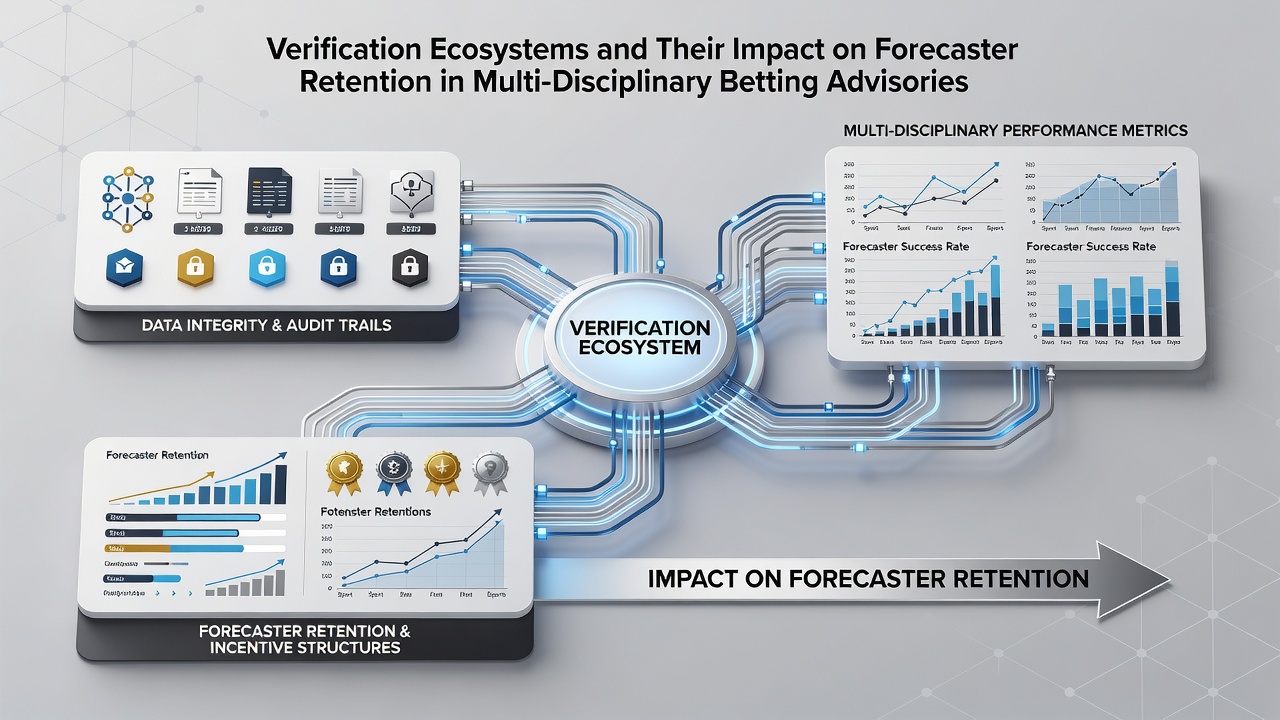 What's interesting is how verification influences forecaster behavior during transitional periods. In July 2026, several platforms reported elevated retention among those handling Wimbledon swing bets and early NFL offseason projections simultaneously, attributing the stability to real-time cross-checks that flagged injury report impacts and form adjustments before they affected user-facing outputs. These checks create a feedback environment where forecasters can refine selections without external pressure, supporting longer-term engagement with the advisory network.
Cross-Disciplinary Effects and Network Dynamics
Network dynamics within verification ecosystems extend beyond individual accuracy tracking to encompass community validation layers that aggregate user-reported outcomes. Platforms that integrate these layers see forecasters remain active because the system distributes accountability across multiple disciplines rather than concentrating evaluation on a single sport. Data indicates that forecasters handling linked bets, such as football halves combined with flat race doubles, demonstrate improved longevity when verification protocols reconcile results from disparate sources into unified performance profiles.
External regulatory perspectives add another dimension. The National Council on Problem Gambling in the United States has highlighted how transparent verification reduces disputes over forecast integrity, indirectly supporting forecaster retention by fostering platform stability. This stability matters in multi-disciplinary settings where forecasters migrate between seasonal peaks, and verified records provide portable credentials that ease transitions between advisory modules.
Conclusion
Verification ecosystems shape forecaster retention by establishing consistent evaluation standards across diverse athletic disciplines and advisory structures. Platforms that maintain rigorous, layered protocols report sustained participation from forecasters who value the clarity these systems provide during schedule shifts and market fluctuations. As multi-disciplinary betting advisory continues to evolve through 2026 and beyond, the connection between verification depth and retention duration remains a central factor in how these networks operate and expand.