User-Driven Validation Loops Shaping Predictive Models for International Matchups and Circuit-Based Events
Mia Friedrich · Jul 12, 2026
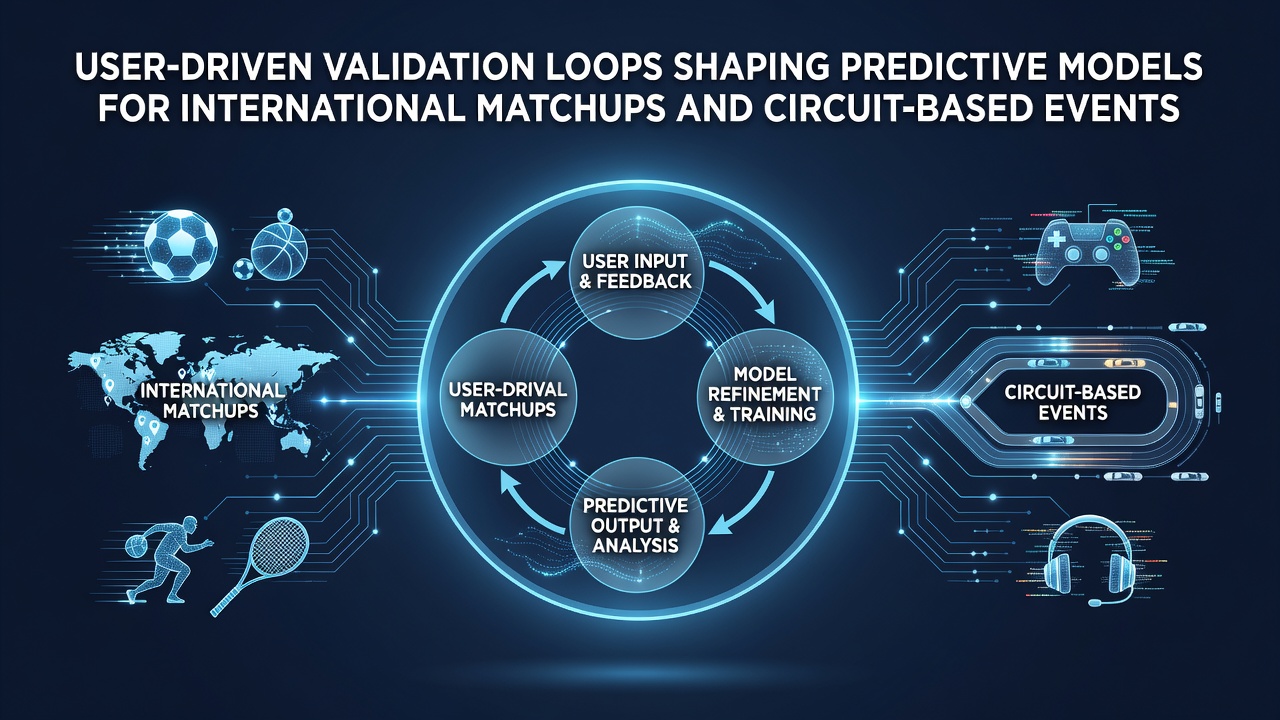
User-Driven Validation Loops Shaping Predictive Models for International Matchups and Circuit-Based Events
Platforms that generate forecasts for international soccer fixtures and multi-stage racing circuits rely on structured user input to refine their underlying algorithms, and this process has accelerated through 2026 as event calendars expand across hemispheres. Validation loops collect outcome data directly from participants who review selections after matches conclude, then feed corrections back into model parameters within hours rather than weeks.
How Feedback Cycles Operate in Practice
Operators record each prediction alongside final results from leagues in Europe, Asia, and the Americas, while similar data streams arrive from thoroughbred meetings in Australia and North America. Users flag discrepancies through structured forms that capture variables such as weather shifts at track venues or last-minute roster changes in basketball tournaments, and these entries trigger automated retraining steps that adjust weighting factors for the next set of events. Research from the Australian Institute of Sport shows that platforms incorporating daily user corrections achieve measurable gains in accuracy for events spanning multiple time zones.
Engineers segment incoming data by competition type so that models handling single-elimination tennis circuits receive different treatment from those processing weekly soccer rounds. The separation prevents cross-contamination where patterns from one discipline distort projections in another, and system logs from major platforms confirm that such segmentation reduces error rates when schedules overlap during peak summer months.
Geographic and Temporal Scaling Challenges
International matchups introduce variables that domestic leagues rarely present, including travel fatigue across continents and varying officiating standards. Circuit-based events add further complexity because participants compete at successive venues with changing track conditions or court surfaces. Validation systems address these factors by tagging each forecast with location metadata and surface-type identifiers, allowing the model to recalibrate coefficients when user reports indicate consistent underperformance in specific regions.
By July 2026 many platforms had integrated real-time APIs from governing bodies in multiple countries, enabling faster ingestion of official results that users then verify through independent observation. This dual-check approach limits the propagation of erroneous data points that could otherwise skew long-term projections for events scheduled months ahead.

Network Effects on Model Stability
Larger user cohorts produce denser feedback graphs that expose subtle biases earlier than smaller groups detect. When thousands of participants review forecasts for a single Champions League tie or a Grand Slam qualifying round, outlier reports surface quickly and receive priority weighting during the next model update. Observers note that platforms maintaining active user bases across at least four continents record fewer sustained deviations from actual outcomes compared with regionally concentrated services.
Data exchange protocols between independent forecasting services have also emerged, allowing aggregated validation signals to flow between organizations without exposing proprietary code. These arrangements, documented in proceedings from the European Association for Sport Management, help smaller operators access broader sample sizes that improve their handling of circuit events where participant pools remain limited.
Integration with External Data Streams
Validation loops increasingly combine user reports with structured feeds from injury databases and travel-logistics trackers maintained by national sports agencies. A Canadian study published through Sport Information Resource Centre demonstrated that models receiving both human corrections and automated external inputs maintained higher calibration scores across an entire season of cross-border competitions. The combination reduces reliance on any single source while still preserving the human element that identifies contextual factors algorithms might overlook.
Maintenance schedules for these systems now align with major calendar resets, such as the transition between European club seasons and southern hemisphere racing festivals. During these windows, teams pause full retraining cycles long enough to audit accumulated user corrections and remove entries flagged as inconsistent by majority consensus.
Conclusion
User-driven validation loops continue to influence how predictive systems process outcomes from international matchups and circuit-based events, with measurable effects on calibration speed and geographic coverage. As data volumes grow through 2026 and beyond, the mechanisms that route feedback into model updates will likely determine which platforms sustain reliable performance across expanding global schedules.