Tracing User Networks That Validate Accuracy in Multi-Sport Advisory Platforms
Theo Wolf · May 17, 2026

Tracing User Networks That Validate Accuracy in Multi-Sport Advisory Platforms
Multi-sport advisory platforms rely on interconnected user networks to cross-check prediction accuracy across events like soccer matches, horse races, tennis tournaments, and basketball games, and researchers have mapped these networks through graph analysis techniques that trace how individual tips gain confirmation from collective performance records. Data from platform logs shows that users who contribute verified outcomes create feedback loops where successful predictions strengthen node connections while inaccurate ones receive lower weighting in subsequent calculations.
Platforms aggregate historical tip results from thousands of participants each month, and this process highlights clusters where consistent performers in one sport influence validation for tips in others. Observers note that network density increases during high-volume periods such as major tournaments, when users submit more frequent updates that allow algorithms to refine accuracy scores in real time.
How User Connections Form Validation Pathways
Tracing begins with registration data and activity timestamps that link users who follow similar tip categories, and these pathways expand when participants share outcome reports that match official results from governing bodies. Studies in data science demonstrate that platforms apply centrality measures to identify influential users whose past records carry greater weight during accuracy assessments, which in turn shapes the visibility of new tips across the network.
Take one system where analysts tracked interactions during the 2025-2026 season and found that users active in both flat racing and basketball prop bets formed tighter clusters than those focused on single sports, and these clusters produced higher confirmation rates for linked predictions. The connections operate through shared verification steps where one user's reported result triggers checks against multiple independent sources before the network assigns an updated reliability metric.
Data Patterns Observed in Multi-Sport Environments
Figures from platform analytics indicate that accuracy validation improves when networks span at least three distinct sports categories because cross-referencing reduces isolated errors that appear in narrower datasets. In May 2026, several services reported expanded user participation following the conclusion of winter leagues, which allowed fresh data streams from spring events to test and reinforce existing network pathways.
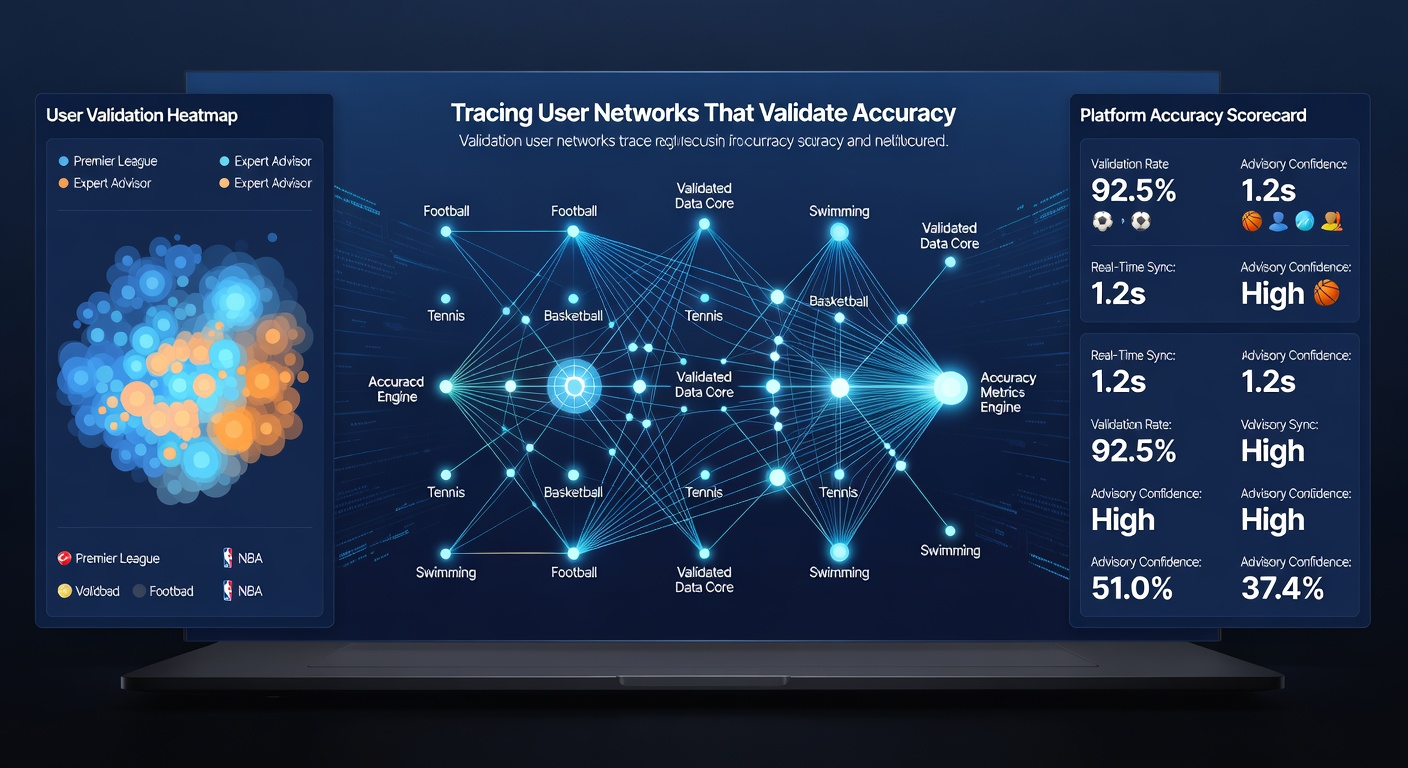
What's interesting is how temporal patterns emerge, with validation strength peaking shortly after major fixtures when outcome reports flood the system and enable rapid consensus building. Researchers have documented that platforms using these networks achieve measurable gains in predictive consistency compared with isolated tip evaluation methods, and the gains appear most pronounced in markets that combine team sports with individual competitions.
Technological Approaches to Network Tracing
Algorithms process user activity into directed graphs where arrows represent confirmation flows between tips and outcomes, and machine learning models then adjust edge weights based on historical match rates. According to findings published by the Australian Institute of Health and Welfare, similar network structures appear in responsible gambling monitoring systems that track user behavior across betting categories, which shows the broader applicability of these tracing methods beyond advisory platforms alone.
Additional tools include blockchain-style ledgers that timestamp each verification event and prevent retroactive alterations to accuracy records. Those who have examined platform architectures observe that privacy-preserving techniques such as differential privacy allow networks to contribute data without exposing individual identities, and this balance supports continued user engagement while maintaining compliance with regional data regulations.
Regional Variations in Implementation
European services often integrate user networks with licensing requirements that mandate transparent accuracy reporting, whereas North American platforms emphasize real-time dashboards that display network-derived confidence levels for each tip category. Data released by the Nevada Gaming Control Board highlights how operators in regulated markets increasingly incorporate user-sourced validation to meet audit standards for advertised performance claims.
Users in these environments frequently participate across borders, and the resulting international connections add diversity to validation datasets that single-region systems cannot replicate. This geographic spread proves particularly useful when one market experiences delays in official result reporting while another provides immediate confirmation through active participants.
Conclusion
Tracing user networks provides multi-sport advisory platforms with structured mechanisms to validate tip accuracy through collective verification and weighted historical performance. The approach connects activity across soccer, horse racing, tennis, and basketball by building pathways that reinforce reliable predictions and diminish the influence of inconsistent ones. As platforms continue to refine graph-based analytics and privacy measures, the networks deliver measurable improvements in confirmation processes that support informed decision making for participants worldwide.