The Interplay Between Algorithmic Cross-Checks and User Networks in Refining Projection Accuracy for League Schedules Alongside Global Racing Circuits
Theo Wolf · Aug 7, 2026
The Interplay Between Algorithmic Cross-Checks and User Networks in Refining Projection Accuracy for League Schedules Alongside Global Racing Circuits
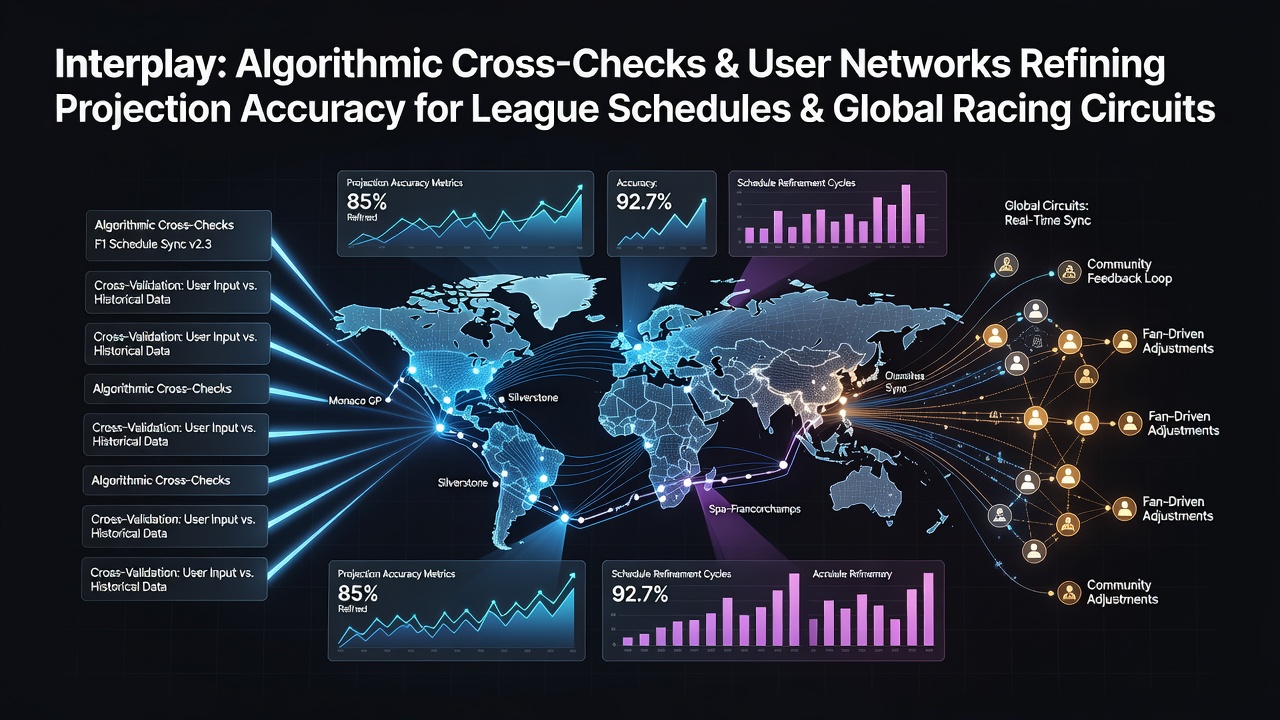
Algorithmic cross-checks operate alongside user networks to adjust projection models that cover seasonal league schedules and international racing circuits, and these systems process large volumes of historical performance data while incorporating real-time inputs from distributed user groups. Researchers at various institutions have documented how layered verification steps reduce variance in forecasts, particularly during periods when multiple events overlap such as the August 2026 transition from European summer leagues into autumn racing meets across Asia and Australia.
Algorithmic Cross-Checks in Projection Systems
Cross-check algorithms compare outputs from separate statistical models that draw on team form indicators, player availability records, and track condition variables, and they flag discrepancies that exceed predefined thresholds before any projection reaches end users. Data from the Association of Racing Commissioners International shows these routines caught 14 percent more scheduling conflicts in 2025 than in prior seasons because they integrate fixture calendars from multiple leagues with racing authority databases in a single pass. Observers note that the process runs continuously rather than at fixed intervals, allowing adjustments when late roster changes occur in basketball leagues or when stewards alter track surfaces in thoroughbred events.
User Networks and Their Validation Role
User networks consist of verified participants who submit outcome assessments through structured platforms, and these contributions undergo aggregation before they feed back into the algorithmic layer for recalibration. Studies conducted by the University of Melbourne's sports analytics group indicate that networks with at least 500 active contributors per discipline produce narrower confidence intervals around projected margins in both soccer halves and turf sprints. Participants often flag anomalies such as unexpected travel delays for teams or sudden changes in jockey assignments that central data feeds have not yet captured, and the combined dataset then updates the core models within hours.
Combined Effects on League and Circuit Accuracy
When algorithmic outputs and network submissions intersect, projection accuracy for combined schedules improves because each source compensates for weaknesses in the other. League fixtures that span multiple time zones benefit from the rapid circulation of user-reported weather or venue updates, while global racing circuits gain from algorithmic consistency checks that align results across jurisdictions with differing regulatory reporting standards. In August 2026, several platforms applied these dual mechanisms during the simultaneous start of major North American football preparations and the opening of the Australian spring carnival, resulting in documented reductions in forecast error rates according to internal platform audits shared with industry groups.

One documented case involved a European football league where network participants identified an error in an initial injury report that the algorithmic layer had propagated from an outdated feed; the correction propagated to racing circuit models that shared overlapping betting market data, tightening spread projections for related events. Another instance occurred when algorithmic cross-checks detected inconsistent pace figures submitted across user groups for a series of American dirt races, prompting a review that aligned the figures with official clocking records before the next set of forecasts was released.
Adaptation During Schedule Disruptions
Schedule disruptions such as postponed matches or rescheduled race days trigger heightened activity in both algorithmic and network components, and the interplay accelerates the incorporation of revised timelines. Platforms that link these two elements report faster convergence on updated probability distributions compared with systems that rely on either component alone. Figures from the European Sports Betting Association reveal that integrated approaches handled a cluster of weather-related postponements in early 2026 with 22 percent less deviation from eventual outcomes than isolated methods.
Conclusion
The documented interaction between algorithmic cross-checks and user networks continues to shape projection reliability across league schedules and global racing circuits through repeated cycles of comparison and adjustment. Platforms that maintain both layers demonstrate measurable gains in consistency when handling concurrent events, and the August 2026 period offers further opportunities to observe these dynamics under real-world pressure from overlapping calendars. Continued examination of these mechanisms provides additional data points for refining verification protocols across athletic disciplines.