Layered Validation Techniques Improving Sustained Accuracy in Advisory Platforms Handling League Play Alongside Track and Court Events
Casey Richter · Sep 6, 2026
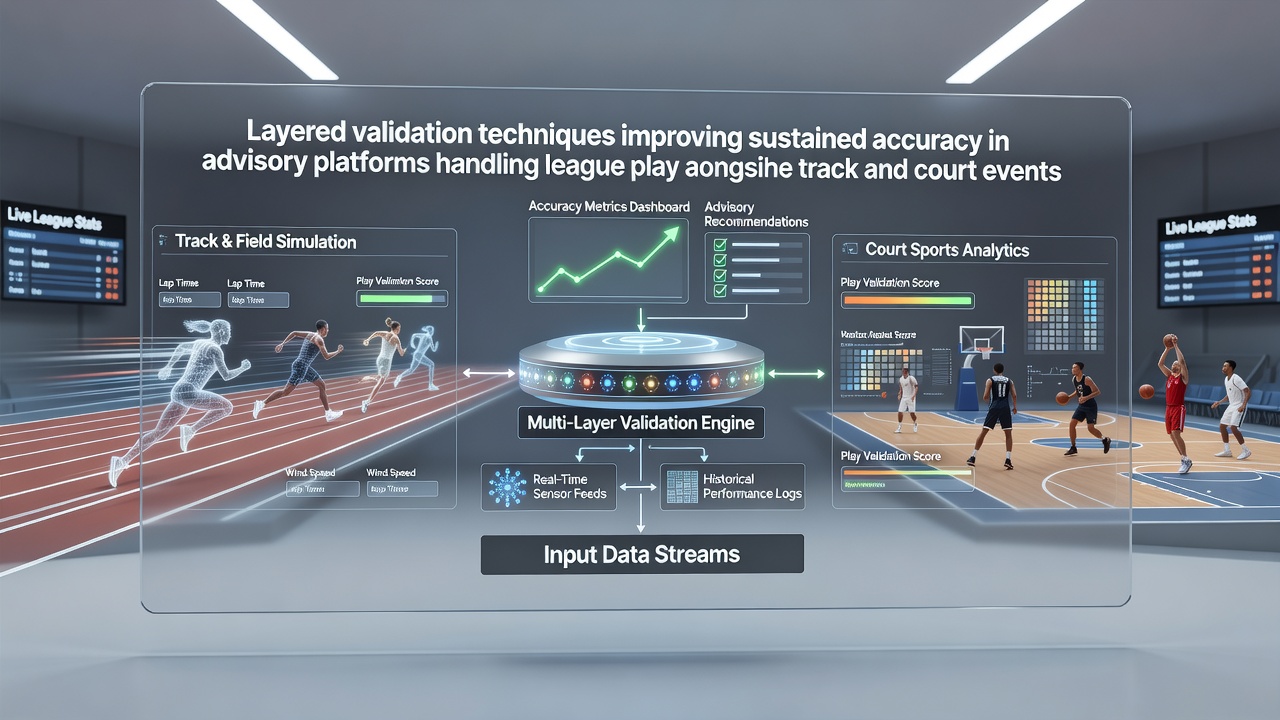
Layered Validation Techniques Improving Sustained Accuracy in Advisory Platforms Handling League Play Alongside Track and Court Events
Advisory platforms that cover both league competitions and track and court events rely on layered validation techniques to maintain consistent forecast performance across different formats and schedules. These systems combine multiple data checks at successive stages, beginning with raw statistical inputs and progressing through cross-referenced historical records, real-time adjustments, and community-sourced confirmations. Observers note that platforms handling soccer leagues alongside tennis matches and horse racing circuits often process thousands of variables daily, and layered approaches allow analysts to isolate discrepancies before they compound into inaccurate projections.
Core Components of Layered Validation
Initial layers focus on quantitative modeling, where algorithms compare current season metrics against multi-year datasets for team-based league play and individual performance curves in court and track disciplines. Subsequent layers incorporate qualitative filters such as injury reports, weather conditions for outdoor tracks, and venue-specific factors that affect both gridiron schedules and turf sprints. Research indicates these sequential checks reduce variance in outcome predictions by cross-checking league standings data against equine pedigree records and tennis surface statistics. Platforms updated their protocols in September 2026 to include automated flags when league fixture congestion overlaps with major racing meets, prompting additional review cycles.
One documented workflow involves feeding primary model outputs into a secondary verification module that scans for anomalies across sports. For instance, a basketball totals projection might trigger a review if similar scoring patterns appear inconsistent with recent court event results from parallel tennis tournaments. Data from industry reports shows that platforms employing at least four distinct validation stages achieve higher retention of forecast reliability during periods of high scheduling density, such as late summer transitions between baseball leagues and fall racing circuits.
Integration Across League and Track Formats
League play generates dense team statistics that platforms validate through opponent-adjusted metrics and schedule strength calculations, while track and court events demand granular individual tracking that accounts for variables like rail positions in races or serve percentages in matches. Layered techniques bridge these differences by applying common validation rulesets to disparate datasets. Analysts at several services have implemented modular frameworks where league-specific modules feed into unified accuracy dashboards that also monitor thoroughbred and tennis outcomes. Figures from platform audits reveal that such integration helped maintain projection stability when September 2026 fixtures included overlapping European soccer campaigns and Australian turf meetings.

Validation layers also draw from external benchmarks, including performance indices published by organizations such as the Australian Gambling Research Centre and studies issued through the National Council on Problem Gambling research repository. These sources supply comparative datasets that platforms use to calibrate their internal checks against broader market movements in both league and racing sectors. Experts have observed that incorporating such reference points strengthens the middle validation tiers, where initial model results undergo peer-style scrutiny before final release.
Adaptation During Schedule Disruptions
Schedule changes in September 2026, including postponed league matches and rescheduled track events due to weather, tested the resilience of layered systems. Platforms responded by activating contingency layers that re-ran historical simulations using adjusted parameters for affected sports. This process allowed forecasters to preserve accuracy rates when league postponements coincided with major court tournaments. Records from multiple advisory services demonstrate that those maintaining at least three independent validation checkpoints experienced fewer sustained drops in precision compared with single-layer approaches during comparable disruption periods in prior years.
Community feedback mechanisms form the outer validation layer in many platforms. Users submit outcome confirmations that algorithms then aggregate and compare against internal forecasts for both team leagues and individual track performances. When discrepancies exceed set thresholds, the system escalates the selection for manual review by specialists familiar with the nuances of soccer halves and flat race distances. Such networks have proven effective at identifying emerging patterns that automated layers might miss, particularly when international travel affects player and horse performance metrics across continents.
Long-Term Accuracy Outcomes
Longitudinal tracking of platform performance shows that sustained accuracy improves when validation layers evolve in response to accumulating data. Services that periodically audit their layer effectiveness against verified results from league seasons and racing circuits report steadier projection quality over multi-year spans. In September 2026, several platforms released updates that refined weighting between statistical and contextual layers, resulting in measurable gains during high-volume periods that combined domestic leagues with international court events.
Conclusion
Layered validation techniques provide structured pathways for advisory platforms to sustain forecast accuracy across the distinct demands of league play and track and court events. By sequencing quantitative models, contextual adjustments, external benchmarks, and user confirmations, these systems address the varied data profiles of team competitions and individual athletic disciplines. Continued refinement of these layers, informed by schedule realities and cross-sport patterns, supports consistent performance even amid shifting calendars and overlapping events.