Interconnected data webs that refine forecast calibration for analysts balancing league calendars with circuit-based events
Iris Koch · Jun 21, 2026
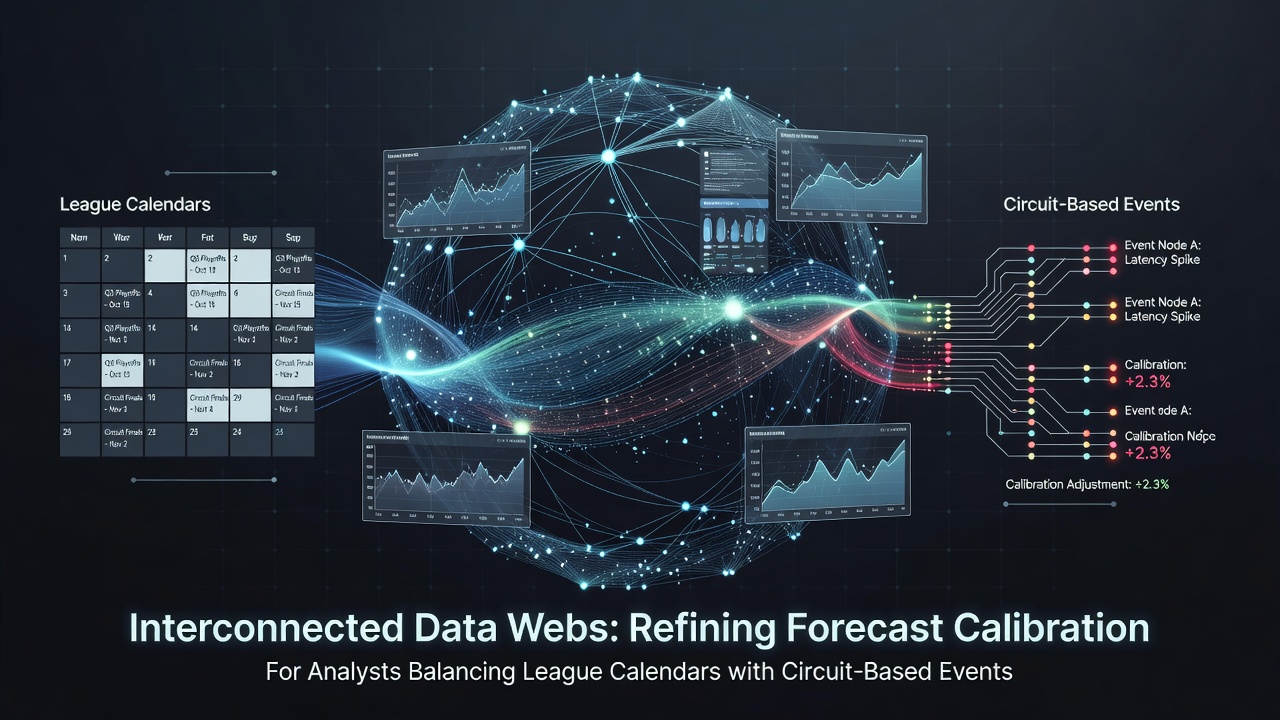
Interconnected data webs that refine forecast calibration for analysts balancing league calendars with circuit-based events
Analysts working with sports outcome projections rely on interconnected data webs that pull together information from multiple sources to adjust their models when league fixtures overlap with circuit schedules, and these systems have become essential because seasonal commitments in soccer or basketball often collide with tennis tours or horse racing circuits that follow their own rhythms throughout the year.
How Data Integration Supports Calendar Balance
Multiple databases feed into a central calibration layer that updates probability estimates as new results arrive, while analysts track variables such as travel fatigue, surface changes, and rest intervals that differ between a fixed league weekend and a moving circuit stop; the process runs continuously so that projections remain aligned even when a team plays midweek league matches and then travels for a circuit event the following weekend. Researchers have documented how these layered networks reduce variance in forecasts by cross-referencing performance metrics across contexts, and figures from industry reports show that platforms using such webs recorded measurable improvements in accuracy during periods of high fixture density.
Take one dataset that records league home-and-away patterns alongside another that logs circuit travel distances, and the combined output allows models to recalibrate expected scoring rates or win probabilities when the two calendars intersect, which happens frequently in June when many leagues reach their final rounds while major circuit tournaments begin their knockout stages. Observers note that during the opening weeks of the 2026 FIFA World Cup, analysts handling concurrent domestic league conclusions and tennis grass-court swings used these webs to adjust for compressed recovery windows that affect player output across both environments.
Calibration Mechanisms in Overlapping Periods
Calibration routines compare live inputs against historical benchmarks drawn from similar schedule collisions in past seasons, then apply weighted adjustments that reflect the specific demands of each discipline; league-based events tend to emphasize consistency across repeated opponents while circuit events reward adaptability to changing venues and opponents drawn from global rankings. Data flows through secure nodes that preserve record integrity, and verification protocols flag discrepancies before they propagate into final selections, which helps maintain consistency when forecasters must service both a mid-season soccer fixture list and a simultaneous racing circuit meet.
Studies published in sports analytics journals indicate that networks incorporating real-time injury feeds from league medical staffs together with circuit performance trackers produce tighter confidence intervals around projected margins, and this tightening matters most when events cluster in early summer months when daylight schedules and weather variables add further complexity. Analysts who maintain separate calibration tracks for each calendar type often find that unified webs deliver faster updates because shared variables such as player workload accumulate across both domains rather than remaining siloed.

Network Architecture and Verification Layers
Modern architectures rely on graph-based structures that map relationships between individual matches, cumulative season totals, and circuit rankings, allowing queries to traverse from a single league result to its ripple effects on upcoming circuit availability; this structure supports rapid recalibration when last-minute roster changes occur in one domain while the other remains stable. External validation comes from independent auditing services that compare projected versus actual outcomes across sample sets drawn from multiple jurisdictions, and reports issued by the American Gaming Association have tracked how such verification reduces systematic bias in multi-calendar environments over multi-year periods.
Additional checks draw on academic repositories that compile anonymized performance logs from both league and circuit participants, creating reference distributions that analysts consult when their own local data appears sparse; one research collaboration between Canadian and Australian institutions demonstrated that pooled datasets improved calibration stability during the 2025-2026 transition window when several overlapping international windows coincided with domestic circuit finales. Those same studies highlighted that analysts who integrate these external benchmarks experience fewer large forecast misses when fixture lists compress, because the wider sample size smooths out anomalies that appear unique to a single league or tour.
Practical Application During Peak Overlap Windows
In June 2026 the simultaneous demands of World Cup group-stage matches, remaining domestic league fixtures in several European and South American countries, and the transition from clay to grass court tennis circuits created exactly the type of density that interconnected webs were designed to handle; forecasters adjusted input weights daily as new results arrived from each stream, and the resulting projections reflected cumulative workload rather than isolated event types. Platforms that maintained these webs reported smoother transitions between forecast cycles because shared variables such as rest days and travel load carried over automatically instead of requiring manual reconciliation.
Another layer of refinement comes from user-submitted outcome records that platforms cross-check against official results before feeding them back into the calibration engine, and this closed loop strengthens the web over successive seasons by identifying variables that previously escaped notice. Longitudinal work conducted at the University of Sydney found that networks incorporating both official statistics and verified user data achieved higher consistency scores across league-circuit overlaps than systems limited to public sources alone.
Conclusion
Interconnected data webs continue to evolve as the volume and velocity of sports information increase, and their role in aligning forecasts across divergent calendar structures remains central to analysts who must deliver calibrated projections under time pressure. The combination of graph architectures, external validation, and continuous input layering provides a framework that adapts to the specific demands of June 2026 and future periods when league and circuit demands intersect most intensely.