How Interconnected User Networks Drive Refinement in Forecast Reliability for Various Competition Formats
Sam Simon · Jun 19, 2026
How Interconnected User Networks Drive Refinement in Forecast Reliability for Various Competition Formats
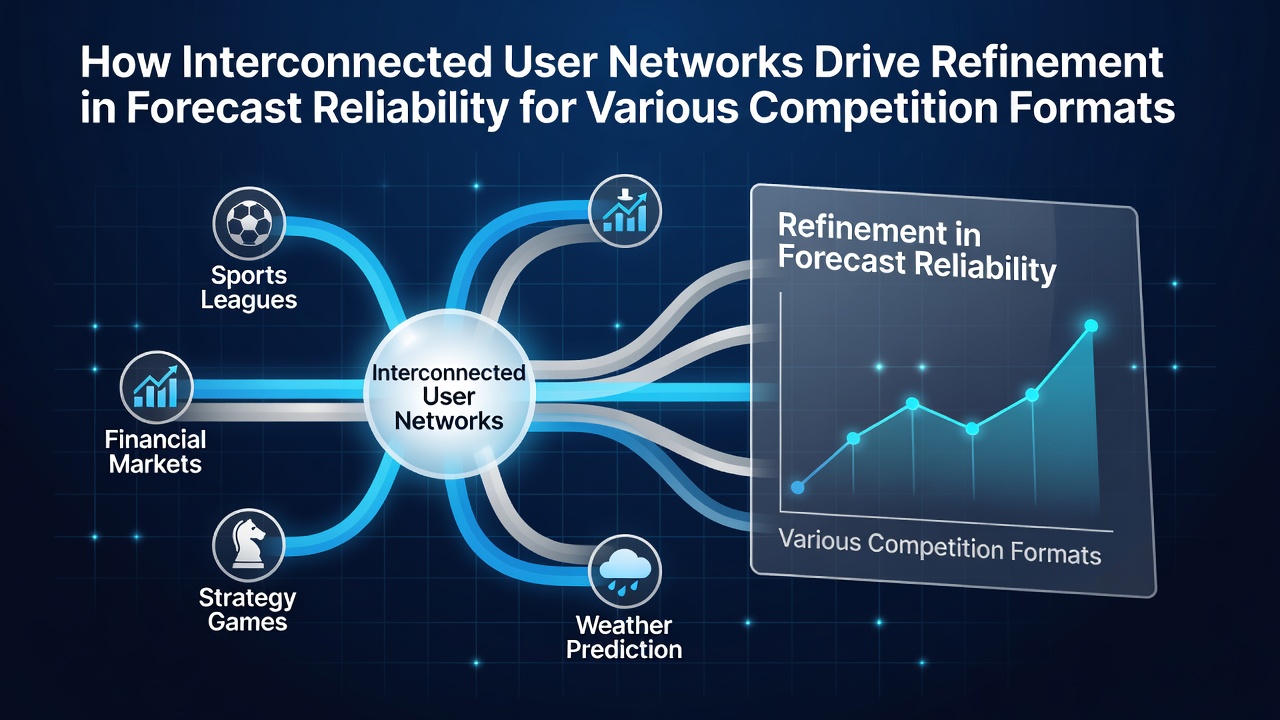
Interconnected user networks have emerged as central mechanisms that refine forecast reliability across competition formats ranging from professional sports leagues to corporate innovation challenges and academic tournaments; these systems operate through continuous data exchange where participants input observations, corrections, and outcome validations that algorithms then aggregate into updated projections. Researchers at institutions studying collaborative prediction have documented how such networks reduce variance in initial estimates by distributing error detection across multiple contributors rather than relying on isolated models.
Network Formation and Data Flow Patterns
Platforms hosting these networks typically begin with core user groups that expand as accuracy metrics become visible to newcomers; each new participant adds variables such as real-time environmental factors or schedule adjustments that isolated forecasters might overlook. Data from multi-format competitions shows that when users link their contributions through shared APIs or verification protocols, the collective dataset grows exponentially, which in turn sharpens probability distributions for outcomes in both round-robin structures and elimination brackets. Observers note that feedback loops activate within hours of an event conclusion, allowing the network to recalibrate weights assigned to different input sources before the next cycle begins.
Refinement Mechanisms Across Formats
In league-style competitions that span months, networks accumulate longitudinal records that capture seasonal trends and injury impacts while tournament formats benefit from rapid, high-volume inputs during concentrated event windows; the same infrastructure supports both by adjusting aggregation rules according to format-specific temporal demands. Studies tracking verified prediction platforms indicate that cross-verification steps, where one user's submission faces scrutiny from peers before inclusion, lower mean absolute errors by measurable margins compared with single-source systems. And when disruptions occur, such as postponed matches or rule changes announced mid-season, the distributed nature of the network enables faster incorporation of revised parameters than centralized teams achieve alone.
What's notable is how these dynamics played out in datasets examined around June 2026, when several international forecasting repositories released aggregated performance logs covering the prior twelve months; analysts observed tighter confidence intervals in events that drew from the largest user clusters, particularly those spanning both team-based and individual-athlete disciplines.
Evidence from Cross-Disciplinary Applications
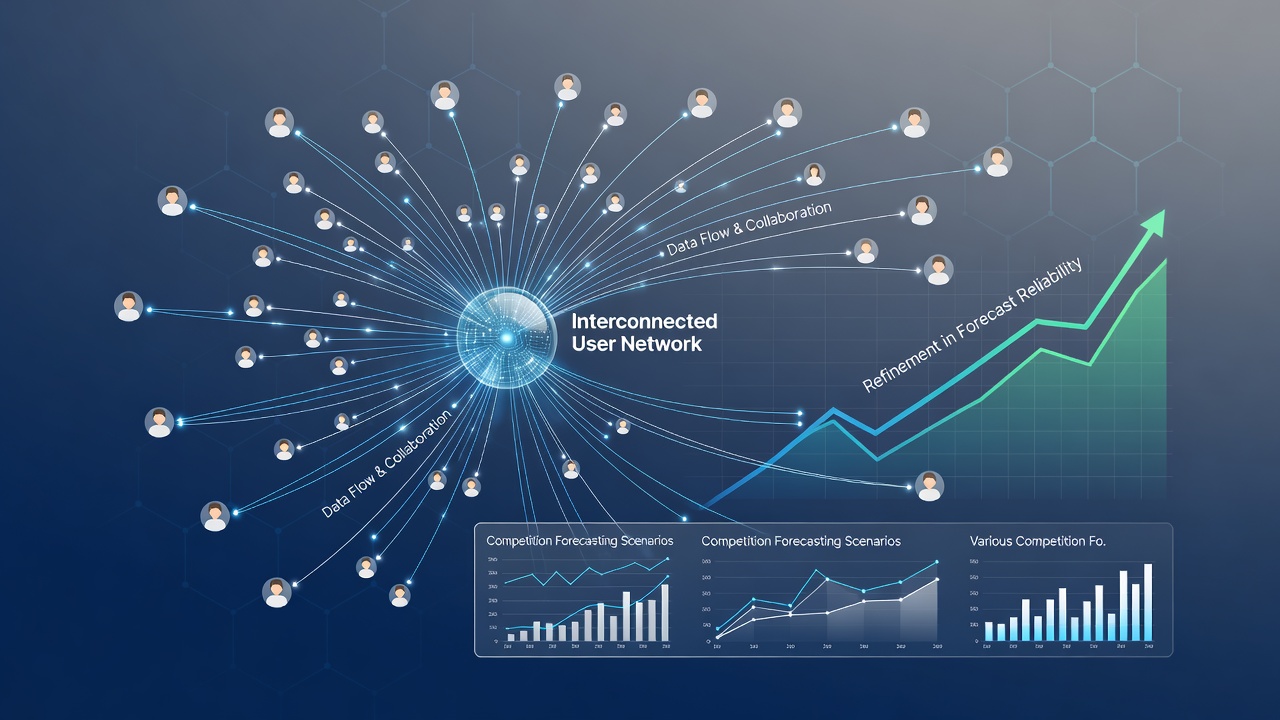
Academic analyses of prediction markets and crowdsourced forecasting services reveal consistent patterns: formats with higher user interconnection density exhibit improved calibration between predicted probabilities and actual results. For instance, platforms covering global racing circuits alongside multi-week football schedules demonstrate that shared validation layers help surface anomalies in data entry before they propagate through subsequent models. Government statistical agencies in regions such as Australia and Canada have published reports on collaborative data ecosystems that parallel these findings, showing how network-driven corrections enhance reliability in public-sector projections tied to competitive events.
One case involved forecasters handling simultaneous coverage of basketball conferences and equine events, where the network flagged inconsistencies in weather-related variables that individual analysts had underweighted; subsequent iterations produced more stable outputs across both domains. External validation from sources like the OECD report on data collaboration ecosystems underscores that such interconnection yields measurable gains in projection fidelity when participants operate under transparent contribution rules.
Long-Term Effects on Platform Stability
Over extended periods, networks that maintain open audit trails for contributions tend to retain higher participation rates, which sustains the volume of fresh data required for ongoing refinement; this creates self-reinforcing cycles where improved reliability attracts additional users who further diversify the input pool. Figures released by research groups monitoring these platforms in 2026 highlighted that competitions drawing from geographically dispersed networks showed lower susceptibility to localized biases compared with narrower contributor bases. The process does not eliminate all uncertainty, yet it systematically narrows the gap between early projections and final outcomes through iterative, collective adjustment.
Conclusion
Interconnected user networks therefore function as distributed refinement engines that adapt forecast models to the distinct structural requirements of different competition formats, drawing on continuous validation to enhance reliability over successive cycles. Evidence accumulated through platform logs and independent studies confirms that the density and quality of these connections directly influence calibration accuracy across league, tournament, and hybrid event types. As datasets expand and verification protocols mature, the role of these networks in supporting consistent performance metrics continues to grow.