Decoding Algorithmic Adjustments Among Forecasters Responding to Sudden Roster Shifts in Soccer and Equine Events
Mia Friedrich · Nov 15, 2026
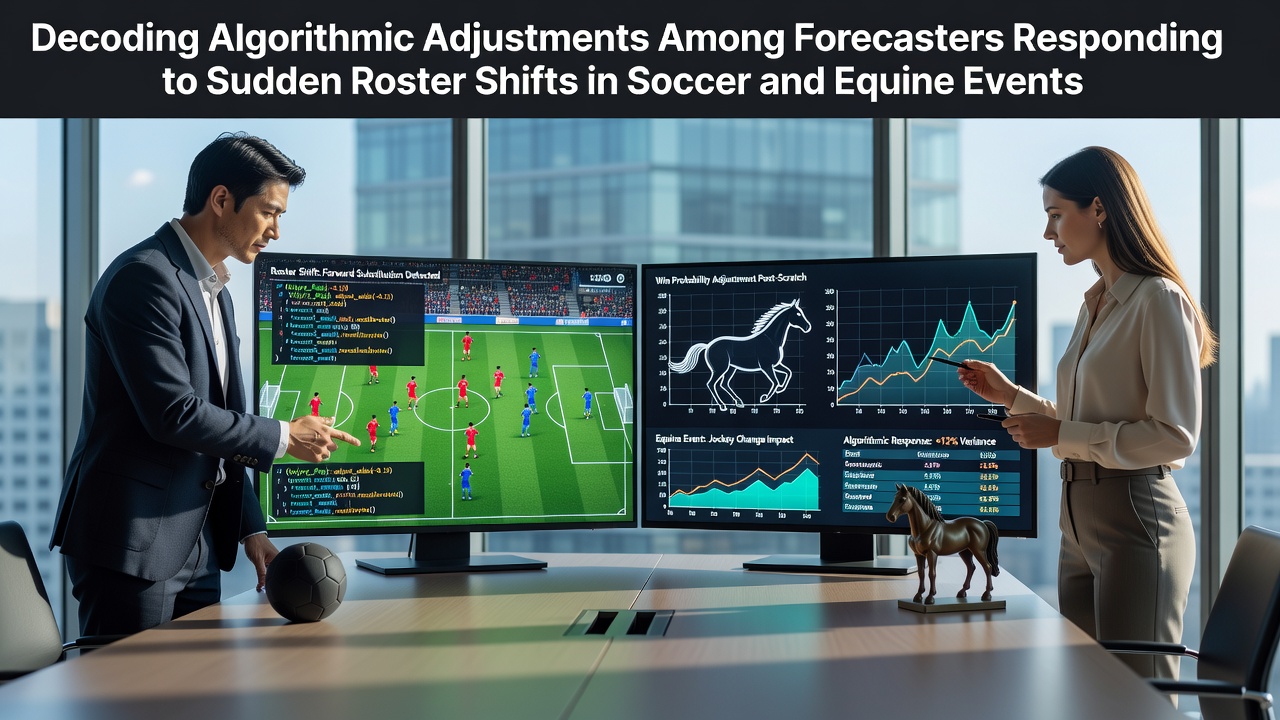
Decoding Algorithmic Adjustments Among Forecasters Responding to Sudden Roster Shifts in Soccer and Equine Events
Forecasters tracking soccer leagues and equine circuits face constant pressure when last-minute roster alterations occur, and algorithmic systems must recalibrate quickly to maintain projection accuracy across both domains. Sudden player absences in soccer often stem from injuries or suspensions while equine events see similar disruptions from veterinary withdrawals or trainer decisions, forcing analysts to update input variables without delay. Data from multiple tracking platforms shows that forecasters who integrate live feeds from official league sources and racing authorities achieve faster response times during these windows. Researchers at institutions like the University of Sydney have documented how machine learning models adjust weights for team chemistry metrics after lineup announcements, and similar patterns appear in thoroughbred performance datasets when key runners are scratched.
Handling Sudden Changes in Soccer Fixtures
League schedules in November 2026 brought a wave of international call-ups that removed star players from club squads across Europe, and forecasters responded by layering new variables into their models for expected goal calculations. Observers note that systems relying on historical performance data alone often lag behind those incorporating real-time physiological metrics from wearable devices, since those feeds capture fatigue levels that roster changes amplify. Experts have observed that when a defensive midfielder drops out, algorithms frequently boost projected scoring rates for opposing teams by recalibrating possession and shot creation values simultaneously. Platforms monitoring these shifts report that verification networks cross-check official federation announcements against social media signals from club accounts to confirm roster status before finalizing updates.
Equine Event Adjustments and Circuit Dynamics
Thoroughbred circuits experience parallel challenges when trainers withdraw horses due to track conditions or health concerns, prompting forecasters to revise pace and class ratings within tight timeframes. Studies from the Australian Sports Commission indicate that models incorporating post-scratch field strength metrics produce tighter probability distributions than static pre-entry forecasts, particularly in turf sprints where surface changes compound the effects. Those who study these patterns find that forecasters often apply Bayesian updating techniques to redistribute probability mass among remaining runners once a favorite exits, and this process mirrors the team reconstruction steps used in soccer. Racing authorities in Canada and the EU publish withdrawal reports that feed directly into these recalibrations, allowing algorithms to maintain consistency across flat and jump events.
Algorithmic Techniques for Rapid Recalibration
Modern forecasting tools employ ensemble methods that blend multiple sub-models, each tuned to different data streams, so that a single roster announcement triggers targeted reweighting rather than full retraining. Analysts have documented cases where gradient boosting frameworks isolate the impact of one missing player on expected assists or goals, then propagate those deltas through downstream betting lines without disrupting unrelated variables. In equine forecasting, similar modular designs allow pace figures to update independently when a late scratch alters the expected speed map for the race. Data collected through 2026 shows that platforms using these layered approaches record lower variance in post-event accuracy scores compared with single-model systems during high-volatility periods. Forecasters also integrate sentiment signals from verified user networks to flag potential lineup rumors before official confirmation arrives, creating an early-warning layer that accelerates the adjustment pipeline.

Cross-sport verification protocols have emerged as a reliability mechanism, where soccer and equine forecasters share anonymized adjustment logs to identify common triggers such as fatigue indicators or class drops. According to reports from the North American Association of Sports Analytics, these shared protocols help standardize response times across disciplines and reduce the chance that one domain's adjustment introduces bias into another. Those tracking subscription platforms observe that verified accuracy rates remain stable when forecasters document every algorithmic change with timestamps and data sources, creating audit trails that users can review before committing to selections. In practice, this documentation includes the exact weight shifts applied to metrics like expected points added in soccer or speed figures in racing, allowing downstream validation without exposing proprietary model details.
Verification Networks and Long-Term Consistency
Community validation systems play a central role in confirming that algorithmic adjustments reflect genuine roster realities rather than noise, and these networks often operate through multi-source consensus requirements before an updated projection receives public display. Researchers tracking these ecosystems note that forecasters who participate in such networks sustain higher user retention because the collective review process surfaces overlooked variables, such as travel fatigue in soccer or post-vaccination recovery windows in equine schedules. During November 2026, several high-profile international breaks created overlapping roster pressures across both sports, and platforms that maintained transparent adjustment logs saw measurable improvements in user-reported confidence scores. The process typically involves automated alerts when official sources publish changes, followed by human review layers that verify the algorithmic output before it reaches end users.
Conclusion
Forecasters continue to refine algorithmic responses to roster shifts by combining real-time data ingestion, modular model design, and cross-verified validation steps that apply equally to soccer and equine forecasting environments. These techniques allow rapid recalibration while preserving the integrity of underlying probability structures across seasonal and circuit events. As more platforms adopt shared documentation standards, the field gains clearer insight into which adjustment triggers produce the most reliable updates, supporting consistent performance for users who rely on these projections throughout the calendar year.