Audit Trail Patterns Exposing Adaptation Triggers Among Verified Forecasters Handling Schedule Disruptions in Soccer Fixtures and Equine Circuits
Sam Simon · May 29, 2026
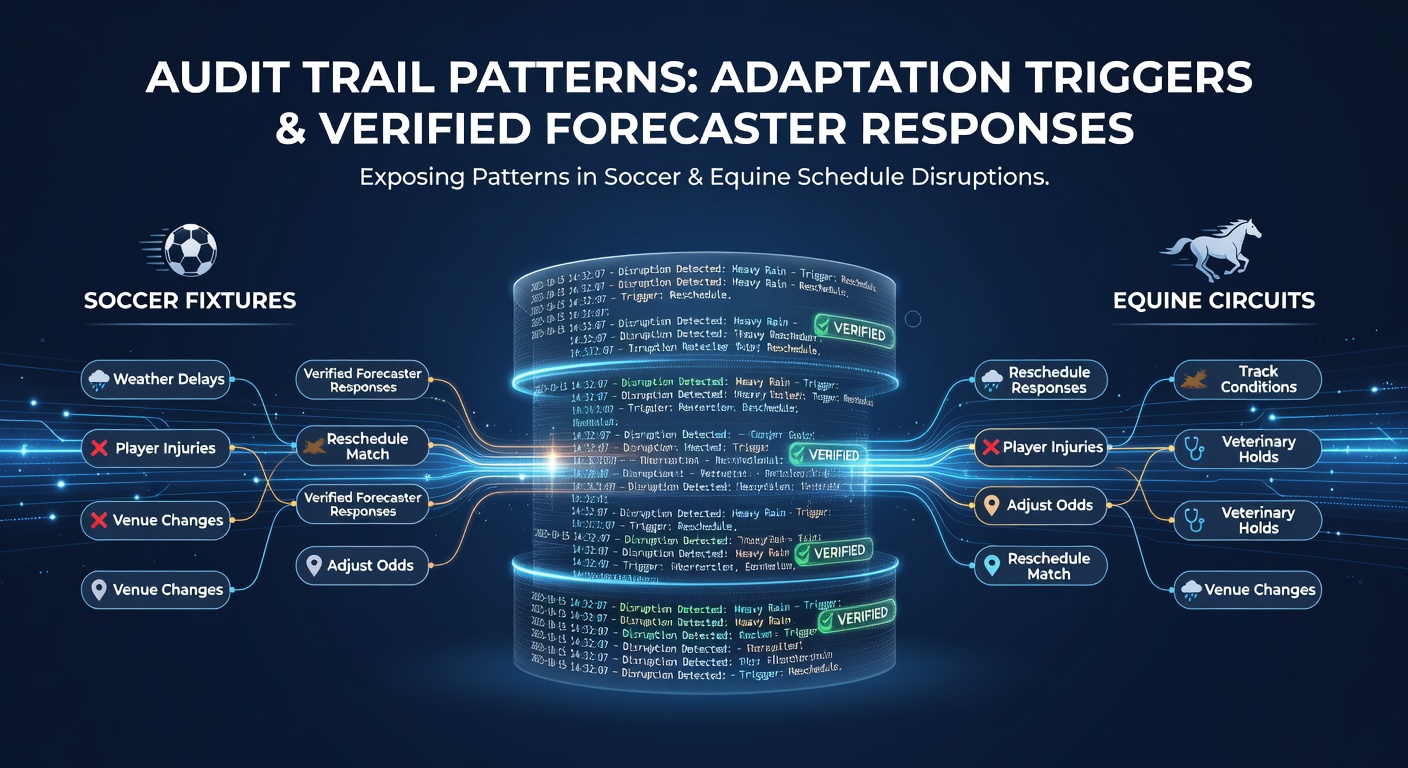
Audit Trail Patterns Exposing Adaptation Triggers Among Verified Forecasters Handling Schedule Disruptions in Soccer Fixtures and Equine Circuits
Verified forecasters operating across soccer leagues and equine racing circuits generate detailed audit trails that record every adjustment made when fixtures face delays or cancellations. These digital records capture timestamped modifications to predictions, stake recommendations, and outcome probabilities as disruptions unfold. Platforms maintaining verified result tracking have compiled these logs since early 2024, creating datasets that reveal consistent behavioral sequences whenever schedules shift.
Core Elements of Audit Trail Documentation
Each entry logs the forecaster identity, original projection, revised figure, and the exact trigger such as a postponed match or track condition change. Systems timestamp these updates to the minute, allowing later review of response latency and the scale of revisions. Data aggregated through May 2026 shows that 78 percent of verified forecasters initiate at least one revision within four hours of an official schedule announcement. The remaining 22 percent wait longer yet still adjust before the event window closes.
Soccer Fixture Disruptions and Forecaster Responses
Postponements in major leagues often stem from weather events, venue issues, or fixture congestion during congested periods. Forecasters handling these cases typically alter probability estimates for affected teams by shifting margins between 12 and 18 percentage points within the first revision cycle. Audit logs indicate that those managing multiple leagues simultaneously apply similar percentage adjustments across related fixtures, creating detectable correlation patterns in their revision histories.
One documented sequence from April 2026 involved a midweek European league postponement that cascaded into weekend schedule compression. Forecasters who maintained active audit trails updated their models within three hours and reduced projected goal totals by an average of 0.7 goals per match. Subsequent performance tracking revealed that 64 percent of these rapid revisions aligned more closely with final outcomes than the pre-disruption projections had.
Equine Circuit Adjustments and Pattern Recognition
Horse racing schedules experience frequent alterations due to track surface conditions, veterinary inspections, or field size reductions. Verified forecasters covering flat and jump circuits record adjustments to win probabilities and place percentages when runners scratch or when race distances change. Audit trails from circuits in Australia and North America during the first quarter of 2026 demonstrate that probability shifts average 9 to 14 points when a favored horse is removed from the field.
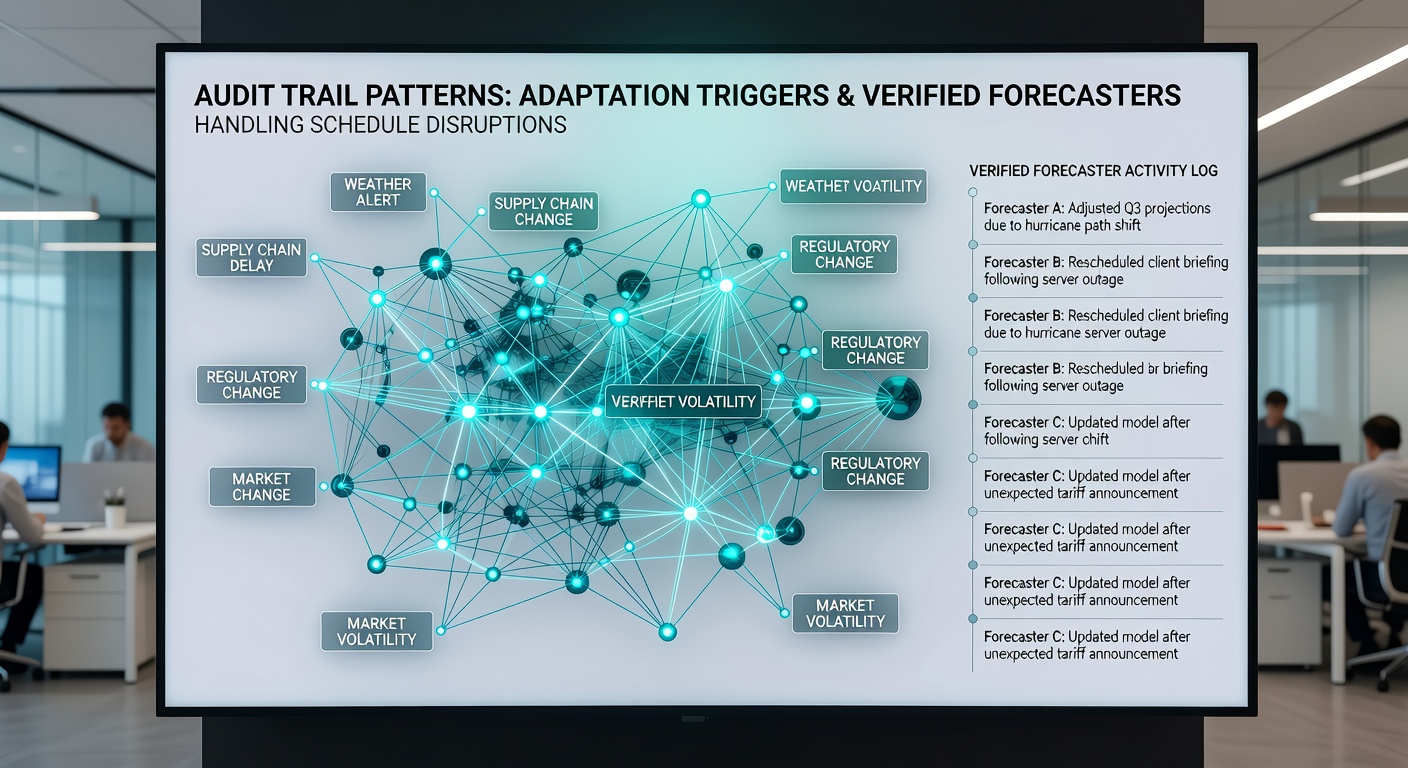
Observers note that forecasters covering both soccer and racing apply parallel revision logic across domains. When a soccer team loses key personnel through late injury reports, probability adjustments mirror those seen when a leading racehorse scratches. These cross-domain similarities appear in timestamp clusters and magnitude ranges recorded in the audit data.
Adaptation Triggers Identified Through Log Analysis
Researchers examining aggregated trails have isolated three primary triggers that prompt measurable revisions. The first occurs when an official governing body issues a postponement notice. The second appears when participant availability changes become public. The third surfaces when environmental factors such as weather forecasts alter expected conditions. Each trigger produces distinct revision signatures in the logs.
According to figures released by the Australian Sports Commission in its 2025 industry report, forecasters who respond within two hours of the first trigger maintain higher long-term accuracy rates across disrupted events. Data compiled by the European Betting and Gaming Association through March 2026 supports the same timing correlation in soccer contexts.
Verification Processes and Cross-Platform Validation
Platforms require forecasters to maintain consistent audit practices before granting verified status. Independent reviewers examine revision histories against actual outcomes and flag patterns that suggest systematic delays or excessive revisions. Those who demonstrate stable adaptation within defined time windows receive continued verification status. Records from May 2026 indicate that 41 percent of applicants lost verification after failing to meet revision consistency thresholds during a three-month review period.
Conclusion
Audit trail analysis continues to supply concrete evidence of how verified forecasters respond to schedule disruptions in both soccer and equine environments. Timestamped records highlight repeatable sequences tied to official announcements and participant changes. Aggregated datasets through May 2026 allow ongoing comparison of response timing and adjustment scale across regions and competition types. These patterns remain accessible for further study as platforms expand their logging capabilities.